Scene
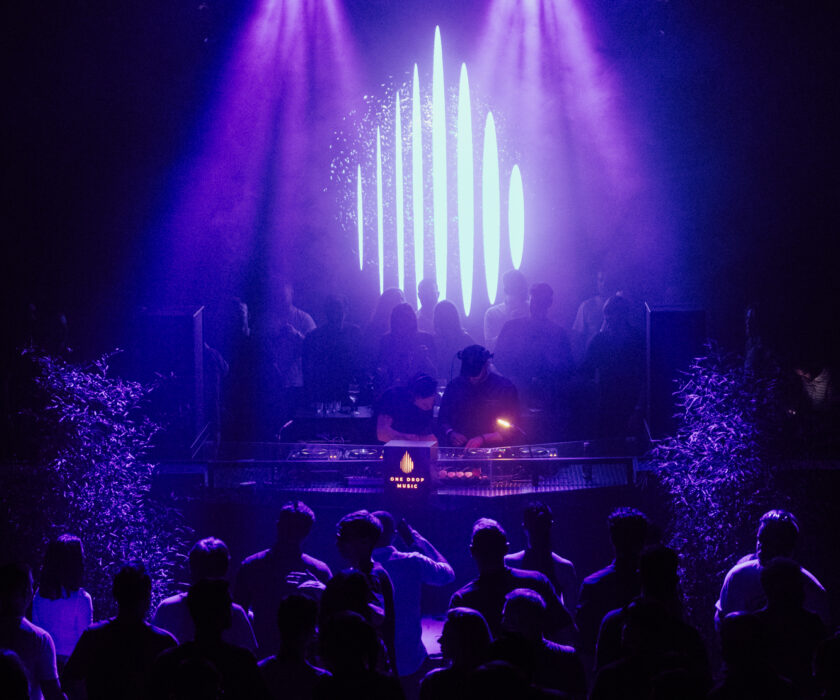
Clubbing and electronic music have always been more than just spaces and sounds for escapism — they are powerful sites of social and political engagement. From the early days of house and techno emerging out of marginalized communities in the U.S., to contemporary DJ collectives mobilizing around social justice causes, the dance floor continues to function as a crucible for resistance and solidarity. The intersection of activism and club culture reveals how the very act of gathering, dancing, and sharing musical experiences becomes a form of political expression. In this dynamic terrain, the rave is not just a party — it can be a protest, a classroom, a healing space, and a platform for transformation.
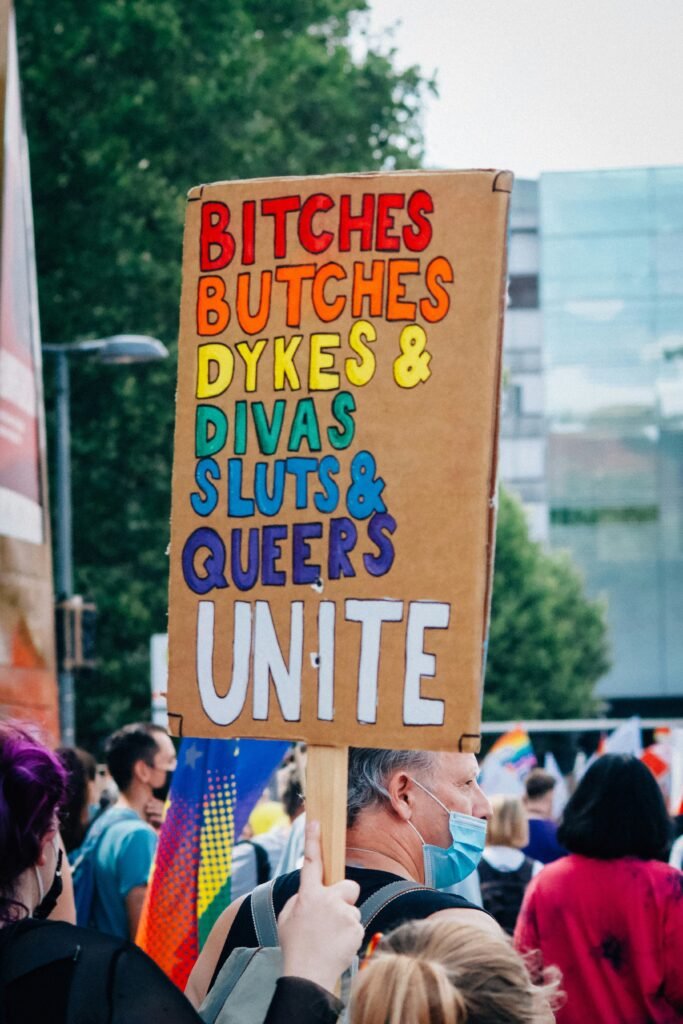
The same is present in the mere narratives of most promoters, organizers, and venues in Croatia and abroad. They emphasize that the dancefloor is a safe space for everyone, no matter their nationality, sexual orientation, or skin colour. They claim zero tolerance for violence of all kinds (physical or verbal) and invite attendees to respect the personal space of every dancer in the room. Events like Glue, Vogue balls, and underground d.o.o. are a perfect example of providing clear guidelines for creating a safe space, while promoting the environmental ‘green’ actions when organizing outdoor raves.
Also, some promoters have already organized charity events, on which all the income from tickets went to someone in need or to a much larger number of people; recently, most often, the population of Gaza. Even though the promoters never emphasize their political standpoint, nor do they care if the attendees belong to the right or left political spectrum as long as they have respect for others, the messages are liberal, green and often go on hand to the left-wing parties.
FLOORUM – First Croatian Political Party Clubnight
The political party that embraced the culture of clubbing, raves, and the underground electronic music scene is the Social Democratic Party, known by the abbreviation SDP, whose Youth Forum (Croatian translation ‘forum mladih’ – FM) recently held its first edition of FLOORUM – a charity-type of clubnight packed with activism. We had a conversation with Karlo Vedak, the vice-president of the SDP Youth Forum, who explained how the concept came about.
“The idea actually came about through a conversation with former presidents of the Zagreb SDP Youth Forum. The president of FM in the 90s, and today’s member of parliament, Marija Lugarić, reminded us of the demo band competitions that FM organized back then, and whose winners were rewarded with a paid recording of their first album. Other events were also organized that provided a space for new, young artists on the alternative and subcultural scene. That’s when we came up with the idea of reviving this kind of space that combines explicit political goals with nightlife, culture and different genres“, said Karlo Vedak, adding that electronic music seemed like a logical choice, as the organizing committee are fans of that genre, and some of them are active in that scene.
Their first FLOORUM was held last month at Zagreb’s club DVA OSAM, featuring a lineup of Bejbi Motorola, Anavi, Vazdaisti, Emillz, and Lew. As it was a humanitarian event, all earnings from tickets went to the Gaza Relief charity. We asked them about the cause and which charities are they planning to support in the future.
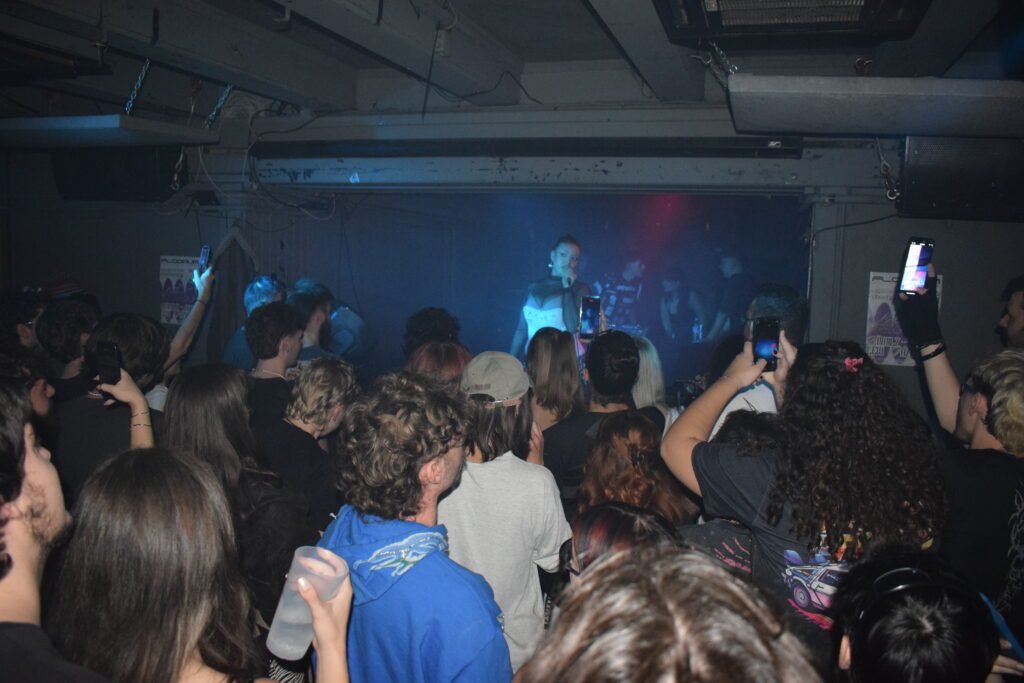
“The choice of Gaza as the humanitarian cause of the first FLOORUM was relatively simple. There are three reasons for this. First, after two years of witnessing mass crimes, violations of human rights and international conventions, and the implementation of genocide, it was clear that Gaza and the Palestinian people deserve our attention. Furthermore, as FM, we ourselves have had a whole series of requests to the Government of the Republic of Croatia for the past two years, including an increase in humanitarian aid. The only truly consistent step was organizing our own collection of humanitarian aid, i.e., finances for it. Finally, we often heard from our peers the same level of horror at the events in Gaza and the desire to help in some way. As political youth, we felt the need to offer them a channel for that desire“, Karlo explained. As per the decision-making, he said that they decide the purpose of the event as a collective, directly on the democratic principle, adding that they still haven’t decided about the next event and its purpose. “We certainly see a whole range of areas/topics that are important to support, and which we certainly deal with through our political work”, he claimed.
Given that this was the FM’s experience of this kind, Vedak said that they are extremely satisfied with the reactions, atmosphere, experiences and results of the first FLOORUM. “We will first take a short break, but we will soon continue with the next initiatives, some of which will probably go beyond the framework of club spaces“, he announced.
Croatian Public Institutions vs. Clubbing Culture
In the recent couple of years post-COVID, the public institutions’ support for the alternative and electronic music scene has decreased, as proven by the series of events. Even though there is a constant rise in the number of DJs, promoters, and new club nights, the scene’s individuals often mention that one of the main problems is that there are few venues where they can host their events. That problem is visible in cities like Split, where Kocka klub was closed for night programs due to a recent inspection. The capital was facing closures of various cultural centers, while the most popular one, the Autonomous Cultural Center Medika, is facing a crisis, as an object that is still seriously damaged after the 2020 earthquake, and internally, which came into public attention after a tragic murder that happened this summer. Following the recent examples, we asked the vice-president of the SDP Youth Forum to share his views on the Croatian subcultures, independent artists status and the electronic music scene.
“The domestic club, art and creative scene is often, like a large number of other areas in late capitalism, excessively left to the whims and laws of the free market. We definitely see room for greater and more coherent support from public institutions in cultivating and nurturing the space of alternative and independent culture”, commented Karlo Vedak, announcing that FM will soon present some initiatives that go precisely in the direction of addressing some of the problems in this area. “All art and culture is political, and the history of electronic music and raves is precisely the history of a space of freedom, equality, and solidarity”, he concluded.