InterviewsScene
After Nina Maštruko, the mind behind onkraj, introduced the vision of her new club night (which you can read about here), we spoke with Maque, an interdisciplinary artist from Bolivia who believes in the transformative power of sensual pleasure and movement. This Friday at AKC Attack, she will perform together with auto_timer at the first edition of the new club night.
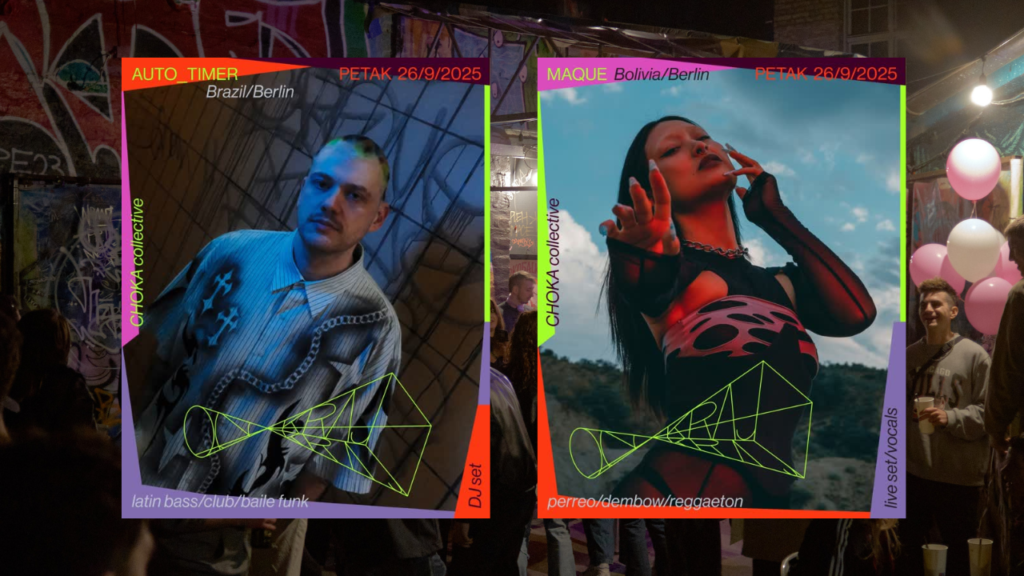
Her music weaves together various Latin American genres with a focus on the perreo style – designed for close dancing, bodily intimacy, and transforming anger into sweat, joy, and sensuality. With us, she shared what art represents in her life, how she merges art and activism, more about Yoggaton – a style she created herself – and much more.
How would you describe your musical and performative style to someone encountering your work for the first time?
I’d describe my music as bassy, sexy, deconstructed, and immersive. My performative work can go in many directions — contemplative, witchy, weird, or more choreographic. Pop culture in general, and Latin American pop culture more specifically, inspire both my music and my performative work. Thanks to forward-thinking producers like auto_timer and Lisa Kida — who produced my EP Baba — the music you’ll hear on Friday is as hot as it is.
You come from Bolivia and now work in Berlin. How does your cultural background and migration experience shape your art?
Migrating really made me appreciate the richness of the culture I grew up with, while also opening space to experiment and mix it with new influences. What I do now wouldn’t exist without that experience, that isn’t always easy, but it’s exciting to see something so powerful grow out of it.
Perreo is a subgenre of reggaeton, but it is not only about partying and dance it also celebrates the body and carries deeper meanings. Could you share with us the political and philosophical layers you see in perreo, and what you consider its most important essence?
To me, perreo is more of an umbrella term than a subgenre. You can go to a perreo (a party), you can perrear with your friends (as a verb), you can practice perreo (as a dance) — and, key to this understanding, you can perrear not only to reggaeton music. In all its forms, perreo connects us deeply to our bodily agency, mainly because it’s not about how it looks from a patriarchal or moralist gaze (as a provocative dance) but about how it makes you feel. It can also serve as a way of protesting against social injustice, as in Puerto Rico with Perreo Combativo or in Berlin with Perrxs del Futuro. Philosophically, I see it as about joy and resistance: it comes from Caribbean neighborhoods that were marginalized and criminalized, and yet music and joy were always at the core. For me, the essence of perreo lies in the joy and playfulness it allows — whether as a tool for resistance and political expression or simply as a way to dance and have fun.
Yoggaton is your own creation, a unique blend of yoga, reggaeton, and activism. Could you tell us how you came to develop it, and have you noticed or heard of other people starting to practice or adopt this style you invented?
I developed it in 2016 while exploring the connection between so-called opposites on a physical level and non-binary thinking through the body. Over the past eight years, I’ve continued to research and teach. In the process, I’ve learned more about the decolonial, pleasure activism, and choreographic potentials of moving and shaking the pelvis. As it grew, I became more involved with the practices from which Yoggaton is derived. I regularly participate in twerk workshops, have trained as a yoga teacher, and am constantly learning more.
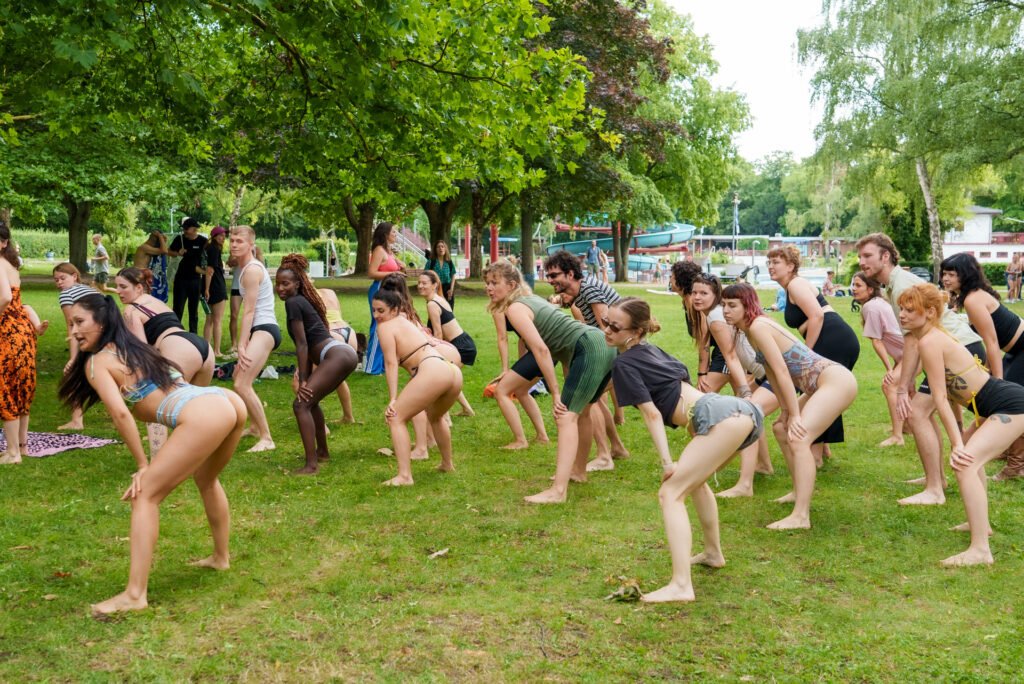
And yes — some people from Germany, Mexico, and Bolivia have written to tell me they use my input in their classes. But even without them telling me, I can see it: I know my work has opened new ways of connecting spirituality and bodily agency to perreo in a feminist context, especially in Bolivia, where the perreo and twerking scene is slowly growing. That’s very rewarding, because part of the intention behind creating the YouTube channel was to spread this thinking and practice — one that honors sensuality, and how healing and empowering it can be to connect with it.
Your work is connected with queer and feminist perspectives, which are important aspects that art needs to engage with. In what ways do they influence your artistic expression? Do you approach them more as a form of personal fulfillment, or as something you want to share outwardly with others?
The main reason I started doing what I do — and why I still do it — was to enjoy my sensuality in a way that distanced it from social constructs like good/bad, saint/whore, and other binary frameworks that penalize or moralize sensual expression, repressing and controlling it. Sensuality is a basic life force that allows us to connect to abundance and to create a healthier image of ourselves. After years of practice, I’m convinced that reframing binary thinking through a body practice is deeply queer, and having agency over one’s sensuality and bodily expression is deeply feminist. As for personal fulfillment versus sharing with others: I think my work comes from an honest place of enjoyment and self-discovery. From there, I share it with others who resonate with it.
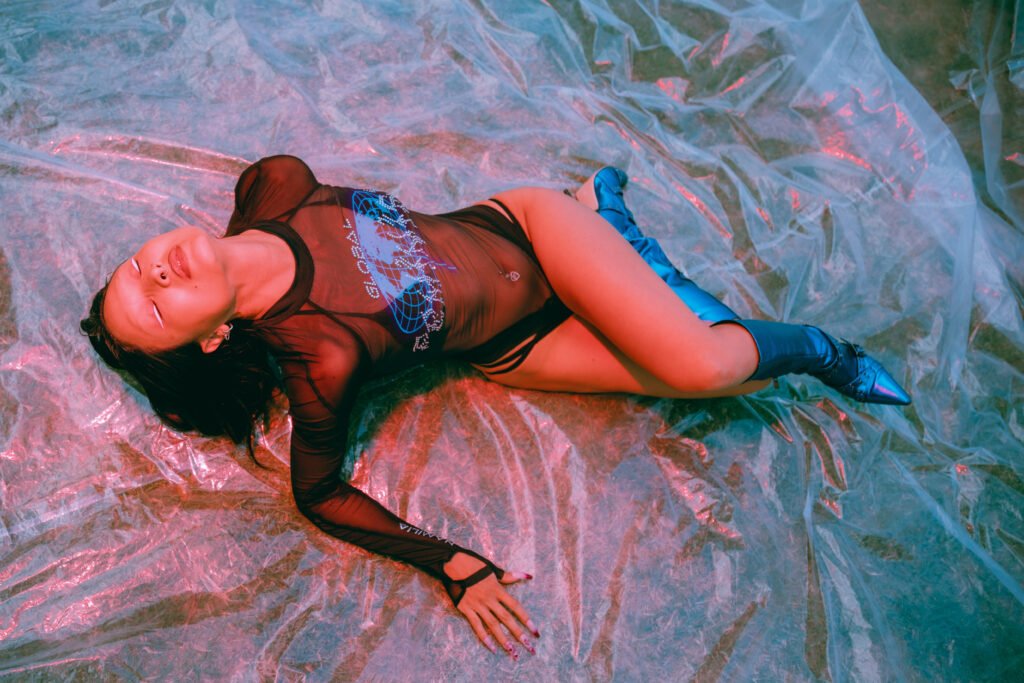
In your practice, the audience is often not just a passive spectator but a participant. How do you design this interaction, and what do you want your audience to feel?
I usually design participation around specific songs or moments in a performance. It’s all about timing and creating space for it. What I want is for the audience to feel a sense of togetherness — to really feel part of it, even if it’s their very first time at one of my shows.
On September 26 you’ll perform in Zagreb at Attack! as part of the new onkraj club nights. What can the audience expect from this performance?
They can expect a performance that shifts a lot — sometimes softer, sometimes harder — but always sexy, packed with deconstructed dembow and reggaeton, and tons of bass.
If you want to experience and feel everything Maque talks about, visit AKC Attack this Friday – you can find your tickets here.