
Last week, Spotify announced that it is partnering with the world’s major record companies — Sony Music Group, Universal Music Group, and Warner Music Group — together with independent-rights organisations such as Merlin Network and Believe — to develop generative AI features under a set of “artist-first” principles.
Spotify framed it as a strategic effort to build AI-powered music tools while protecting creators’ rights, ensuring consent and compensation, and enabling innovation that still puts artists and songwriters at the heart of the ecosystem.
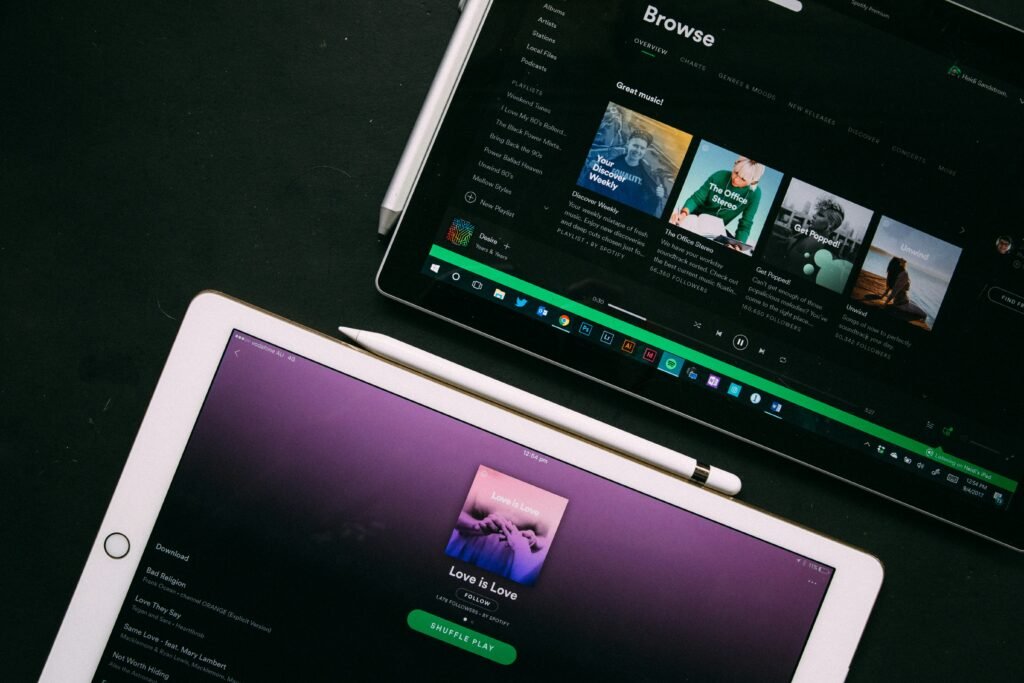
According to Spotify’s announcement, the collaboration will be guided by four key principles:
- Partnerships via upfront agreements – New products will be developed through agreements with labels, publishers and distributors, rather than being a “launch now, ask forgiveness later” model.
- Choice in participation – Artists and right-holders will have agency over if and how they participate in generative-music tools.
- Fair compensation and new revenue – The tools should open new monetisation opportunities and ensure transparent credit for creators.
- Artist-fan connection – AI should enhance the relationship between fans and artists, not replace human creativity.
This move comes at a time when generative AI is increasingly central in creative industries — and not without controversy. However, the Guardian article points out that the music industry has been at pains over copyright issues surrounding AI-generated music, deepfakes of vocals, and training data derived from artists’ works without their consent.
After various petitions, collaboration between Spotify and the major labels/rights-owners marks a significant moment in the evolution of music and AI. If the company and its partners deliver on their promises, this could become a blueprint for introducing generative AI into the creative industries in a way that respects rights and fosters innovation.
For listeners, the coming months may bring novel features: maybe new AI-augmented creative formats, personalised experiences, or tools for lesser-known artists to reach wider audiences. For creators, the key will be how much real control and benefit they gain from the initiative.
In short, this is a proactive attempt to steer AI innovation from the streaming side with creators, rather than offloading the disruption onto them. The real test will be in execution — how the principles translate into tangible features and whether creators feel genuinely empowered rather than sidelined.

