
InterviewsScene
cover photo: Marko Dukić
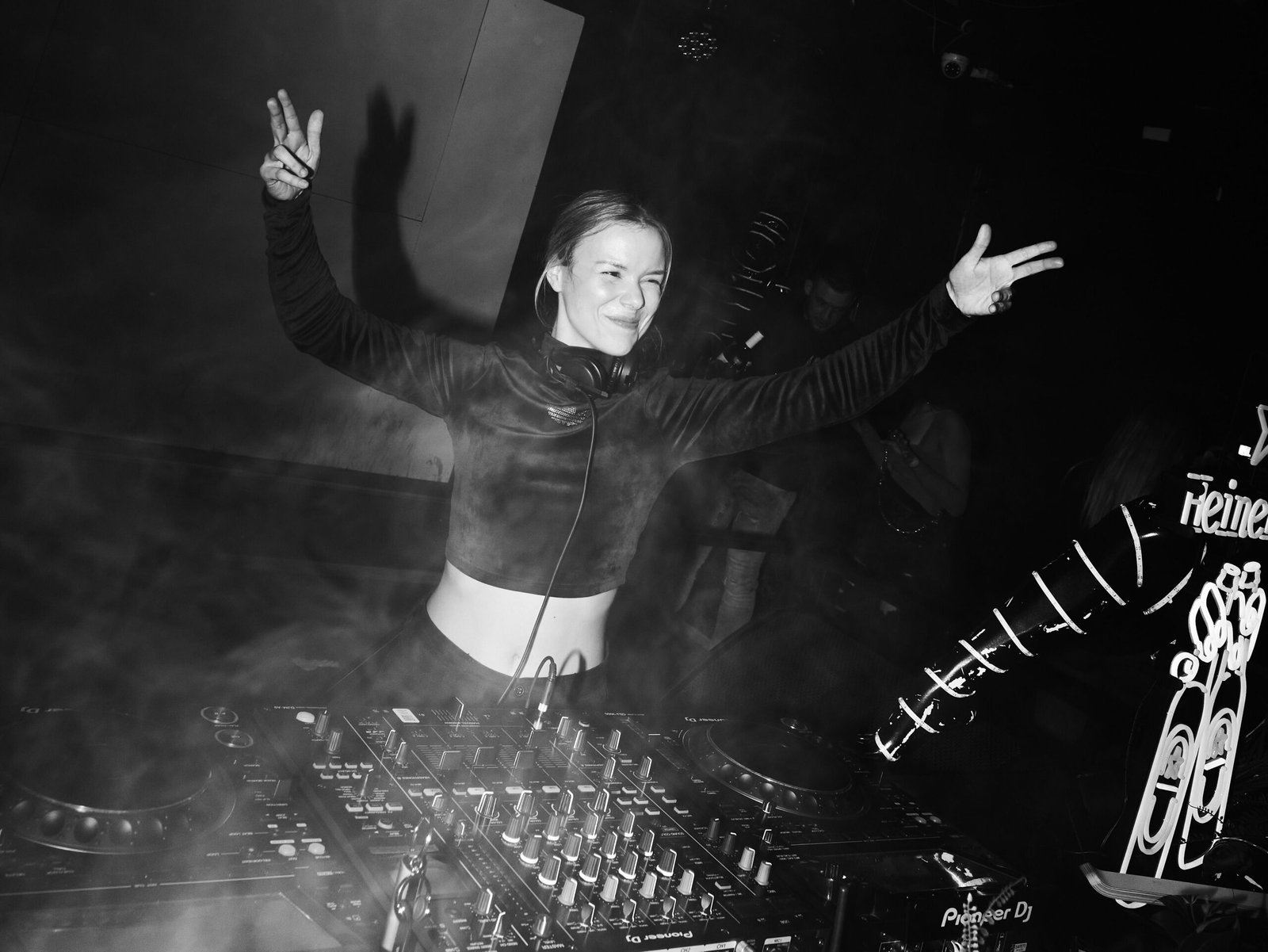
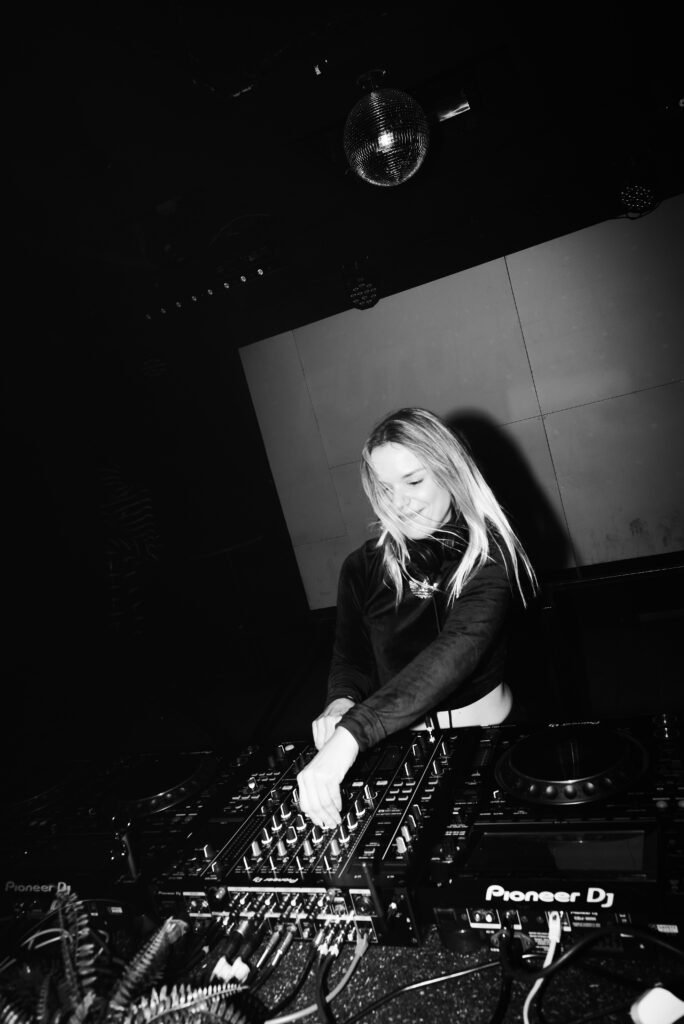
With just over five years behind the decks, this young and promising DJ has already built an impressive number of appearances alongside some of the biggest names in the global electronic scene. Audiences recognize her as a performer who radiates positive energy, elevates the atmosphere, and clearly spreads her love for music through her favorite shades of techno.
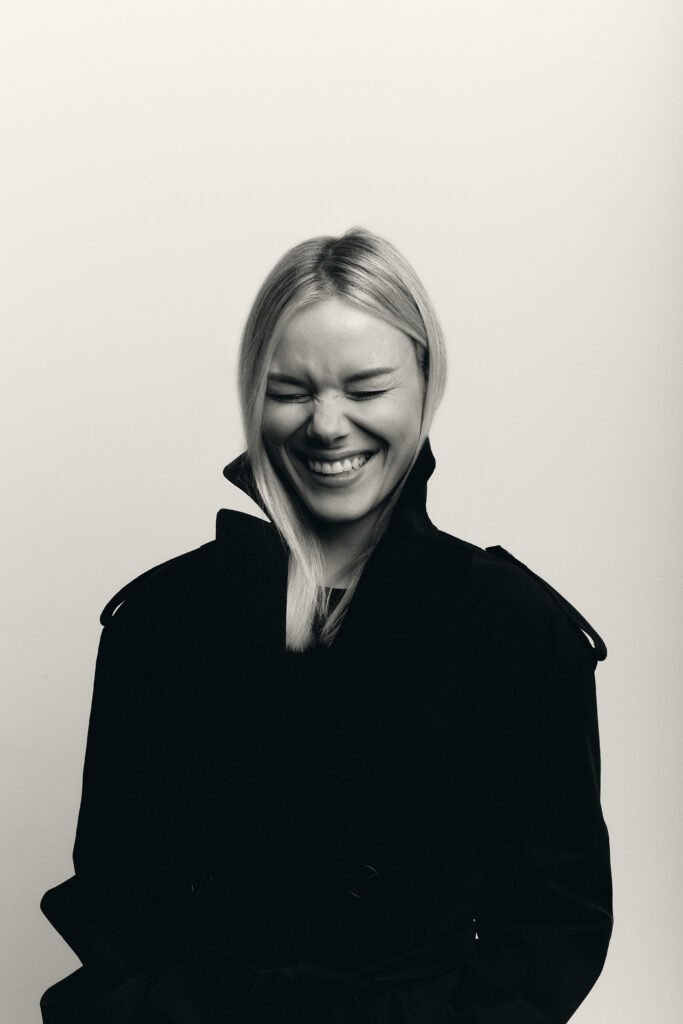
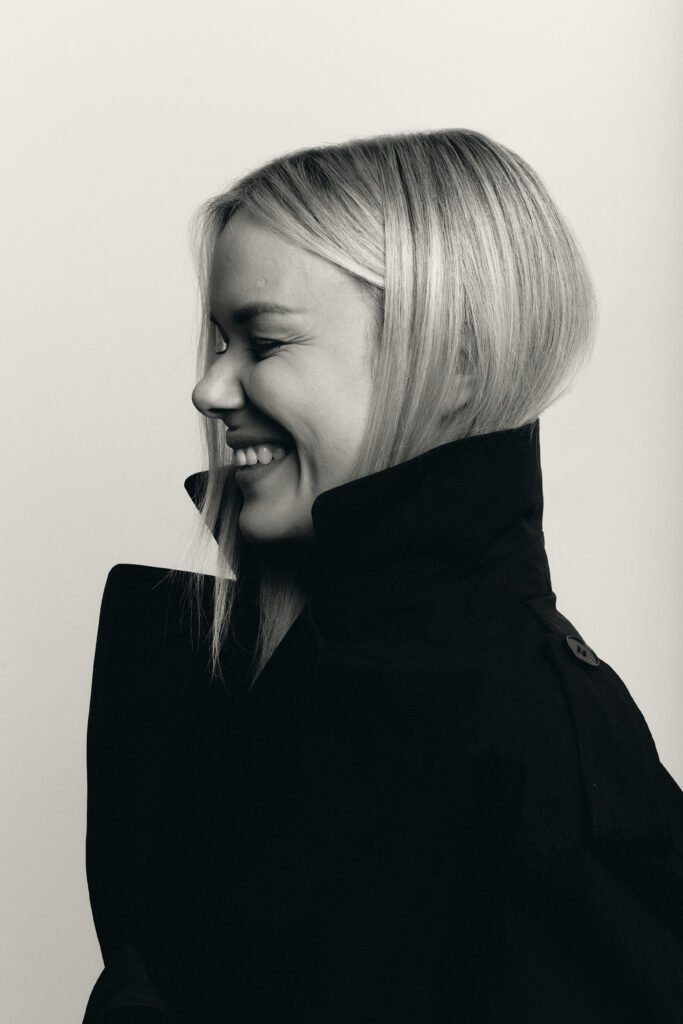
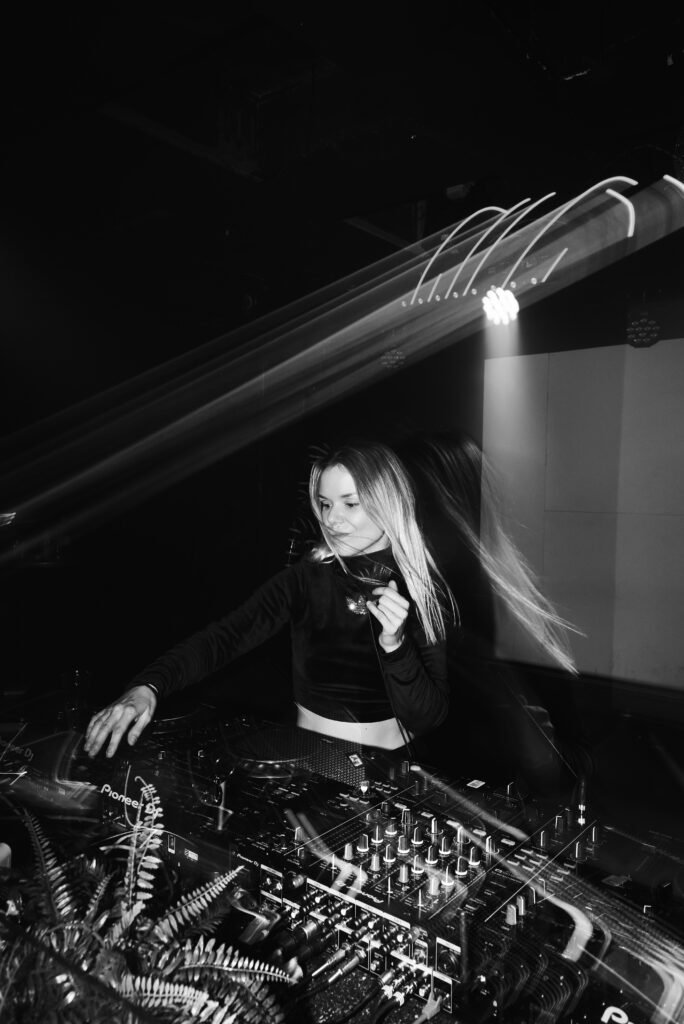
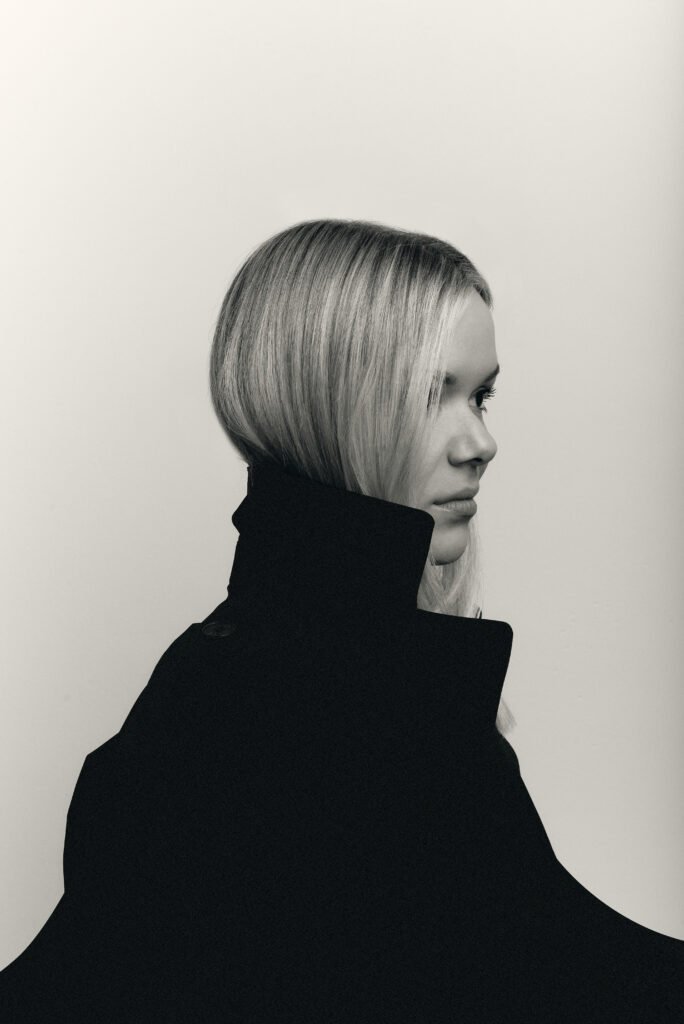
SKA, whose real name is Saška Bojanić, was born and raised in Osijek. For years now, she has been carving out her place on the techno scene in Zagreb. She is a resident of Future Scope, and her style is characterized by a fusion of house and techno, deeply influenced by progressive, indie dance, and deep tech sounds.
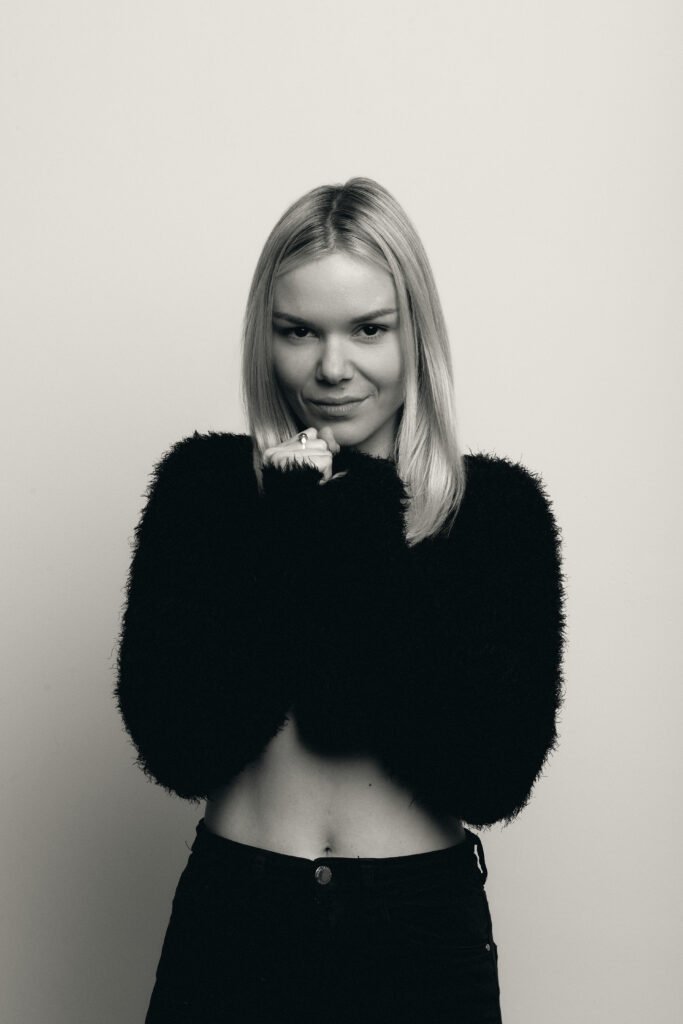
Although she has already shared the stage with major artists such as Sven Väth, Sama’ Abdulhadi, and Ferreck Dawn, this playful and charismatic artist appears to be only at the beginning of what promises to be a shining career.
In a short period of time, she has earned a respectable status among local promoters, which is why she can often be heard at Zagreb’s iconic club Boogaloo, most frequently during the after-hours sessions. In addition to this ‘temple of happiness,’ Saška has performed at Depo Club, Gallery Club, Lift Club, and has become an increasingly frequent guest at Svarog in Zadar.
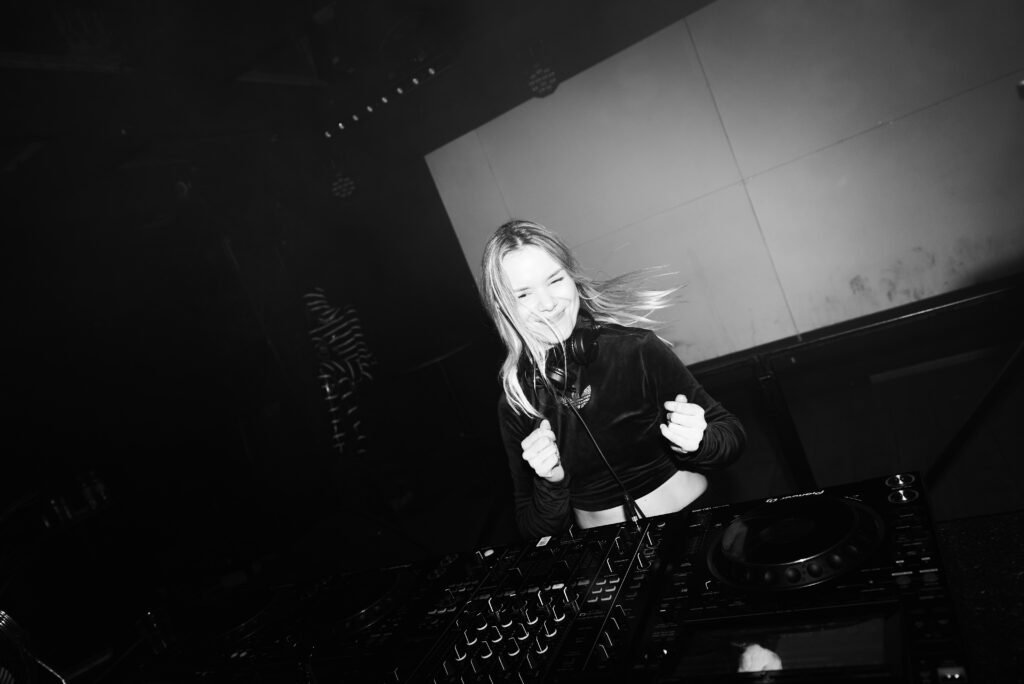
During one of her after-hours performances at Boogaloo, Saška played a track that lifted the energy in the room to such an extent that she stepped down from the DJ booth and joined the crowd, dancing among them in celebration of a job well done. That was definitely the moment when I wanted to get to know this lady better and do an interview with her – a gesture that perfectly reflects the passion and love she has for her job.
A few months after that event, we met in the warmth of her home, accompanied by her adorable cat Musa and, of course, a glass of homemade Slavonian rakija. We talked about her beginnings, her perspective on the scene, and her plans for the future.
Let’s go back to the beginning – when did you fall in love with electronic music? When was the moment you realized you wanted to become a DJ? What did that first step look like and when did you first find yourself behind the decks?
I’ve always loved dancing and music. My whole life, I’ve surrounded myself with people who love music, and that naturally led me to people who listen to electronic music and who introduced me to that entire world. The first time I saw Virtual DJ, I thought, “Oh, I want this. I want to do this.”
After that, I started collecting my own music and decided to put together some kind of set. My first set wasn’t recorded on any special equipment — just on a laptop in a tiny room of a small apartment in Zagreb. With small speakers and phone headphones. But I managed to create a set with my favorite tracks. Just for myself, from the heart. That’s when the creativity in me woke up.
What brought me to where I am now were mostly the connections I made in Zagreb. I connected with some guys who were DJing and had a studio, and they offered to teach me. They were a great crew and genuinely wanted to help. For my birthday, they gave me the chance to play a little set, and until then I had never even touched professional equipment, especially not a mixer or players. It was the best birthday gift ever. An experience I’ll remember for the rest of my life. After that, I decided to buy my own equipment, became independent, and started learning and working on my own.
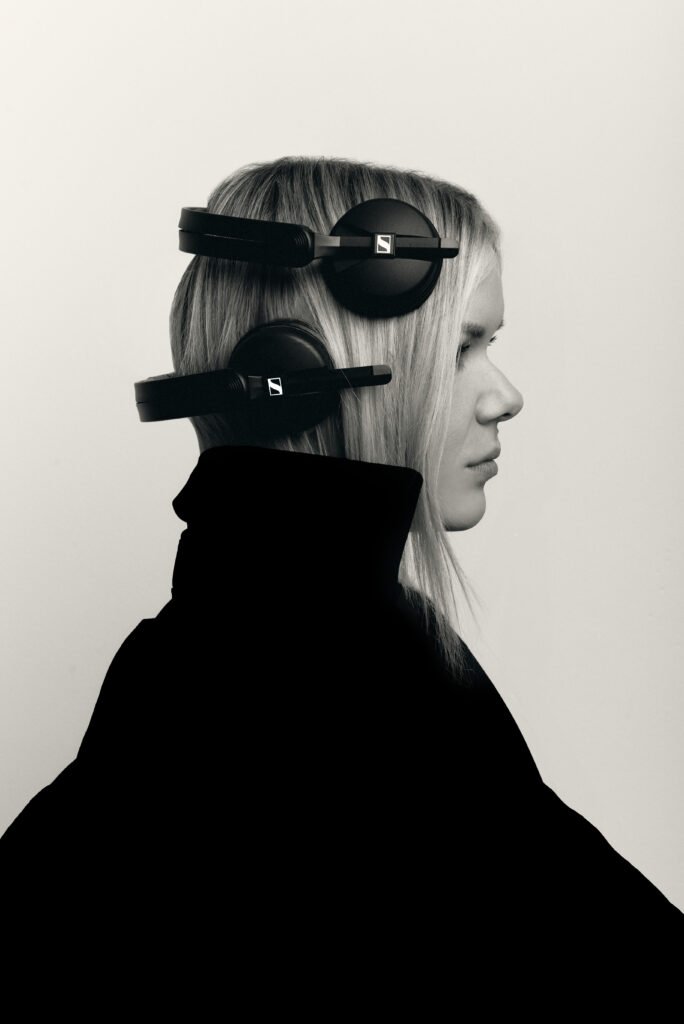
When did you first truly feel that you had become a DJ?
I know that moment exactly. I was playing on the small floor at Boogaloo while Sven Väth was performing on the main floor. It was 2024, around February or March, five years after I had already been DJing. I prepared a lot for that set. My friends kept saying, “Oh my God, Sven Väth is coming! Do you even know who Sven Väth is?” That meant the club would be packed on both floors. Honestly, I thought there would be no one on my floor and I kept asking myself what I was even doing there.
But it turned out to be the opposite. During the set, I wasn’t even aware of what was happening. Only months later, people would come up to me and say, “Hey, you were playing at Boogaloo when Sven Väth was there — you were great.” To my surprise, my dancefloor was full, even though he was probably delivering his legendary vinyl set in the main room, which unfortunately I couldn’t hear.
For months after that set, I would meet people who would say, “Hey, I remember you, you played when Sven Väth was there.” The more people told me that, the more shocked I was at what a huge compliment it actually was. After some time, I started realizing that wherever I went, there would always be at least one new person who recognized me. And then I understood – maybe that’s what I needed. For the audience to recognize me as a DJ, so that I could recognize myself in that role, too.
One thing that’s very characteristic about your performances is your strong connection with the audience – you’re constantly interacting with them, dancing behind the booth, and you seem just as much a part of the party as they are. How important is that interaction to you? Do you consider it an essential part of your performance?
I’ll be brutally honest – I often see it as a big minus. I think I should be more serious. Before every set, I promise myself that this time I won’t act like a little monkey and dance like crazy, but that I’ll stand still and look serious while I play.
But I can’t. It just takes over. The first fifteen minutes I manage to hold myself together, and after that I’m on Mars. They’re dancing, I’m dancing, the music is good, we’ve turned it up as loud as we can, and I completely lose myself in that moment.
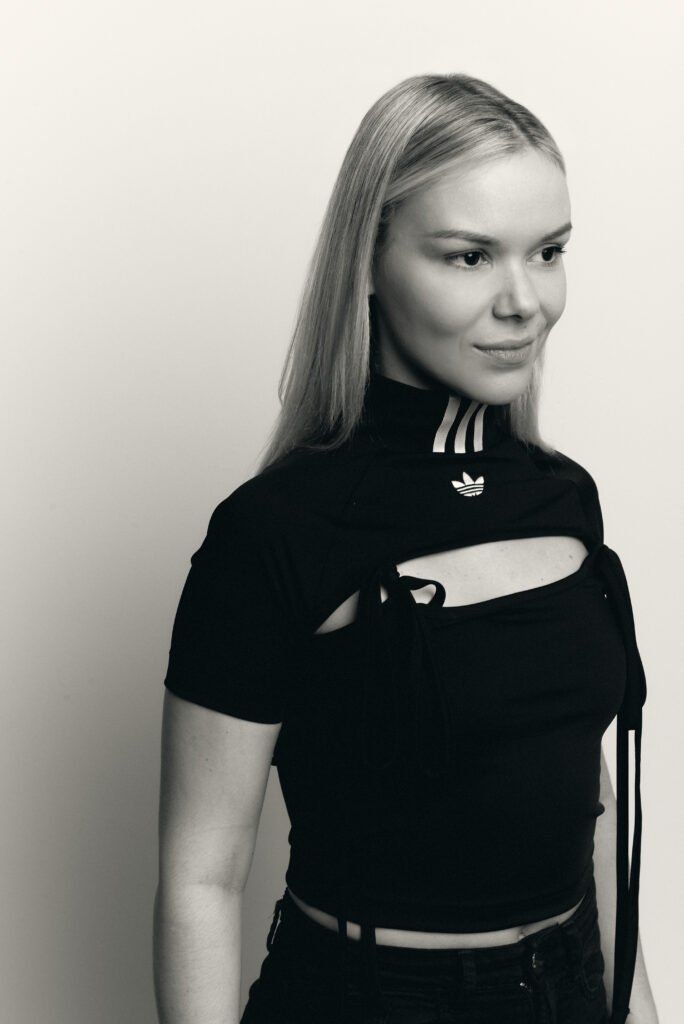
How has your musical style evolved over the years and who influenced it the most?
I’ve often heard that people start their careers with techno, and as they get older, they lean more toward house. With me, it’s the opposite. I started with house, and now I see myself more as a techno DJ.
I have a huge issue with genres – I just love overlapping them and moving from one into another. I don’t like strict limitations to one genre because I generally don’t like limitations in life. I enjoy the freedom to experiment, and that has often defined my sets in a positive way. I also love surprising people and playing something they absolutely don’t expect from me.
On the local scene, among the first to inspire me were DJ Mery (Miljenko Rajaković), Petar Dundov and Felver, not necessarily because of their style, but because of their approach to music. I was first a partygoer, and I always went out for dancing and music. That’s why today it’s most important to me that my set moves people and keeps them on the dancefloor.
How different are your sets from one another?
As I said, I don’t limit myself to genres. I like the whole night to have a good flow and a story, so I try to adapt to the lineup as much as possible without changing my own vibe. It also depends on my mood, where I’m playing, when I’m playing, and the theme of the party.
Do you have your own anthem — something you love to play every time?
I don’t have an anthem, but I do have the guts to play a commercial track in the middle of a set — something everyone knows. I love doing that. There’s almost never been a set of mine without at least one track everyone recognizes, something other DJs often avoid. I remember one party at Boogaloo when I played “Domino” by Oxia and people went crazy because they didn’t expect it at that moment. For New Year’s, I played “Loneliness” by Tomcraft. I love dropping a hit — to me, all hits are anthems, especially when they come at the moment the crowd least expects them, but when they’re still danceable.
Your favorite gig so far?
Uhh… I can’t really single out a favorite, but I can mention the most specific one. It was about four years ago, a colleague organized a boat party on the island of Krk. I didn’t know many people on the boat, and the organizer decided to put only women on the lineup, including me.
The whole vibe that day was totally unique: purple sky, beautiful sunset, the boat rocking like there was no tomorrow. I thought we were all going to die and that I wouldn’t even manage to play my set.
Before I started, it got dark, and I was skeptical and a little scared. My friend told the organizer to anchor somewhere or I would jump off the boat, and he managed to do it. I played the set exactly how I imagined it, everything went perfectly. That day I met a lot of people. It was a completely unusual party with unusual people, and definitely one of the stepping stones in my career.
If you had an unlimited budget and were organizing your own event, what would it look like, where would it take place, and who would be on the lineup?
If I had an unlimited budget, I would create a huge festival somewhere in Slavonia. Big production, a massive structure holding the largest disco ball in the world, just to break some kind of record. The lineup would include DJs from the local and international scene that I personally love. There would be multiple stages, a camping area, and the full festival experience.
I’m sorry that Slavonia doesn’t have a bigger festival. I remember being in a phase when I wanted to listen to house and techno in Osijek and didn’t know where to go. That’s exactly why I would build something really big there.
Do you feel pressure as a woman on the scene, especially when it comes to appearance and image during performances? Do you think the audience sometimes pays more attention to appearance than to the music itself?
Honestly, I don’t experience it that way at all. I dress for a gig the same way I would if I were going out to a club that weekend. What matters to me is wearing something I feel comfortable dancing in. I stress much more about the playlist and the music than about my appearance. I usually get ready at the last minute — running around the apartment and doing quick makeup — but I try to at least prepare my outfit in advance.
I don’t feel like my appearance is the focus. Maybe it would be different if I had ever received a direct comment about it, but so far, all the comments have been about the music, the set, and the energy. I don’t think it’s about whether you’re male or female — it’s about whether the audience connects with your vibe. If someone doesn’t feel your energy, it doesn’t really matter what you’re wearing. And considering that I mostly play in dark clubs, honestly – who’s even looking at what I have on?
Do you see Croatia as a place where young DJs have the opportunity to break through, or is the scene closed and reserved for organizers’ acquaintances?
Look, if I said I did all of this completely on my own, I’d be lying, because I know how much my friends have done for me, introducing me to organizers or recommending me. But I wouldn’t call the scene closed. I think if you’re persistent enough and good at what you do, an opportunity will open up somewhere.
Which up-and-coming young DJs from our scene would you single out?
It’s hard for me to single anyone out because I have a group of girls, younger than me, that I’ve played with, and they’re all really good. But if I have to name someone, I’d say Anja Dominic. In my opinion, she’s still an under-recognized gem who I believe will rise to the surface soon. Anja has a great sense of atmosphere, strong delivery on the dancefloor, and her playlists are truly diverse. She has that certain “click” in her head — and I think her peak is still ahead of her.
What I especially want to emphasize is how impressed I am with the new generation coming onto the scene. What makes me happiest is that they connect music with nothing but pure vibe and sound.
Do you think music isn’t always in the first place today, considering that the scene is often associated with substance use and various other reasons why people go out?
I’m quite strict about this because I’ve always gone out for the music and dancing, and that’s what I value most in the crowd today as well. Although it varies from night to night, I would say that more and more people are coming out for reasons other than just the music.
As for substance use, I have the impression that it’s increasing too, which is why I believe it would be important for clubs and festivals to provide drug checking or first aid points. More than once, as a visitor, I’ve experienced situations where someone near me needed help — and that’s not pleasant at all.
What’s your impression of today’s audience and party scene compared to when you first started going out?
Even though I haven’t been on the scene that long, I can notice certain changes. It seems to me that fewer people are going out, and I often hear that younger generations prefer private gatherings. From my perspective, there are fewer people under 25 in the clubs, but considering the variety of musical genres available today, it’s possible that electronic music simply isn’t their first choice.
What advice would you give to DJs who are currently trying to break through on the Croatian scene, and what has your own journey taught you? Is there any advice you received that stayed with you?
My path was very much connected to friendships and connections, and I’ll always be grateful to those who believed in me and supported me along the way. But what I’ve learned is that you have to be present on the scene and constantly working. Consistency and visibility really matter. If you record a set — publish it. Don’t just keep it to yourself.
For a long time, I believed that if I was good enough as a DJ, clubs would simply call me to play. Later, I realized that it’s actually important to be proactive — to reach out, to send your sets to organizers, and to put yourself out there. I used to think that wasn’t appropriate, but now I would definitely approach it that way. There’s nothing wrong with being rejected — what matters is trying. If today there’s a venue where I want to play, I wouldn’t hesitate to contact them.
So my advice would be: work on yourself, work on your music, stay open-minded, be visible, and genuinely love what you do. Word of mouth is powerful, but it helps when people can see that you’re active and dedicated.
The best advice I ever received was from DJ Jock, who told me to truly know my tracks and my playlist inside out. I don’t know whether that advice is objectively so profound or if I simply needed to hear it at that moment, but it stayed deeply engraved in my memory.
Where does Saška see herself in five years?
Honestly, I don’t like talking about my future plans. That’s an intimate question for me. What I definitely know is that I want to dedicate myself to production — I’m currently in the learning phase. But I always see myself behind the DJ booth, that’s for sure.
So you’re interested in producing your own music?
I am. The only question is when it will materialize. I like being self-taught, so I’d rather struggle for months figuring something out on my own than have someone show me. But yes, I’m currently in the learning process.
What kind of music would that be?
I have some ideas that don’t really go in just one genre direction. I wouldn’t say too much about it yet, but I can say it will definitely be a fusion of all my personalities — and that everyone will be able to find something they like in it.
Stay tuned.
Thank you, Saška, for such an honest and inspiring conversation.
_______________
If you’d like to truly feel and hear everything you’ve just read, make sure to catch SKA at one of her upcoming performances. The first one is already this Friday at Boogaloo, where she will be playing a special B2B set with Shipe at the afterparty of Sama’ Abdulhadi. Her next appearance will also take place at Boogaloo on March 6th, in the small hall, during the event featuring Sam Paganini.

