InterviewsScene
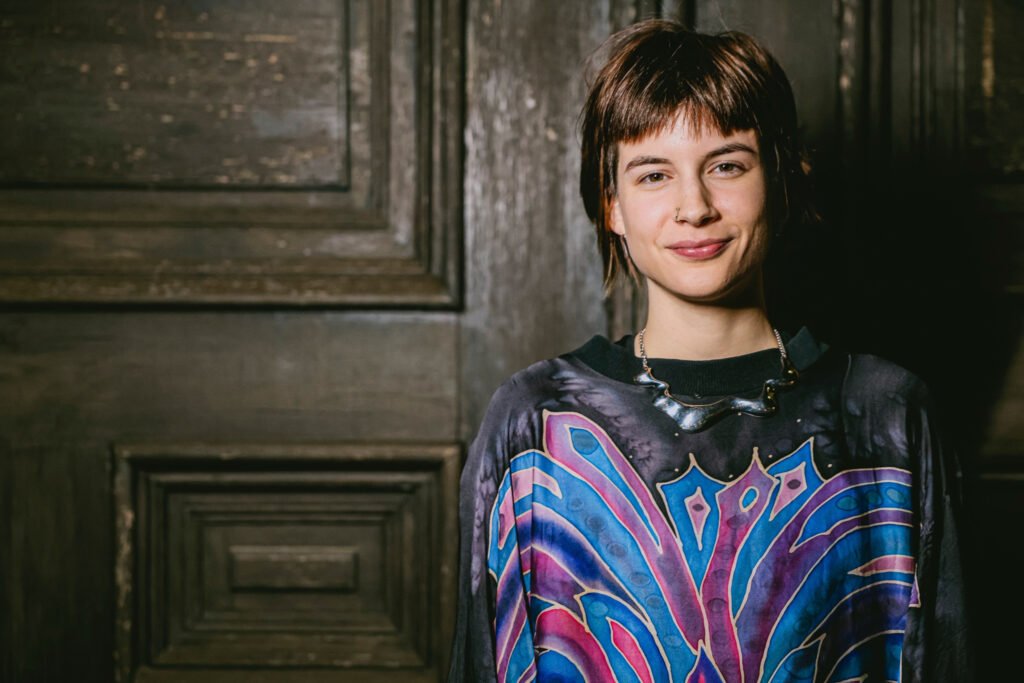
The 33rd edition of the Music Biennale Zagreb begins this week, on Saturday, April 5th, and will run until April 12th, 2025. Zagreb audiences will have the chance to experience a diverse program that explores contemporary and experimental music, as well as interdisciplinary collaborations in visual arts, electronics, and theater. The theme of this year’s festival, Broken Relationships, will be reflected throughout the program, highlighting connections, disconnections, and the exploration of innovative approaches within the world of music and beyond. Nina Maštruko, Head of Communications at MBZ, shared more about this year’s program, collaborations, and additional activities.
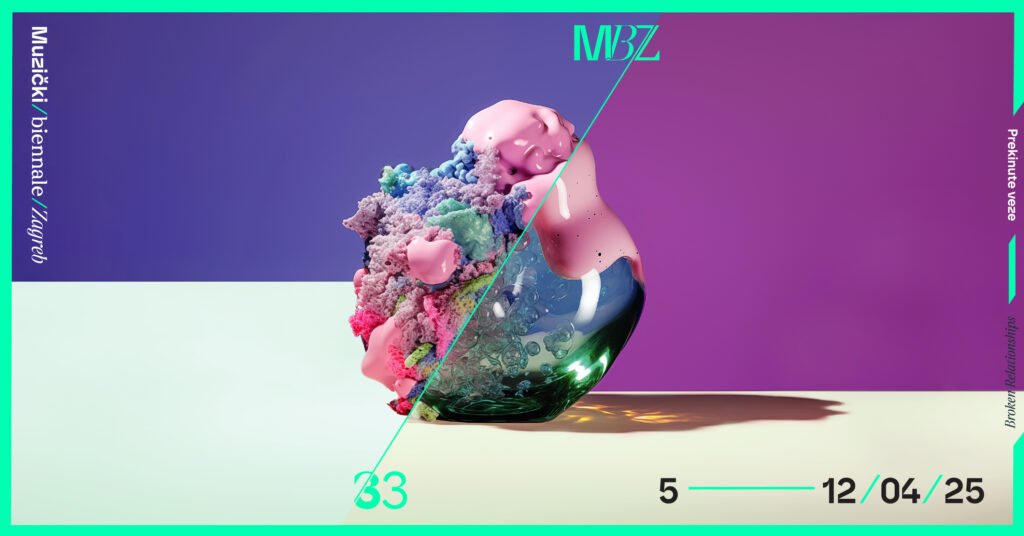
Alongside her role in communications, Nina has taken on part of the collaboration arrangements and curated additional program activities with a focus on the independent scene.
Also known by her DJ name Babilonska, Nina is an active part of Zagreb’s independent music scene. In our conversation, she shared her insights on its landscape, the significance of nurturing it, and highlighted key aspects of this year’s Biennale, emphasizing the festival’s role in the local cultural community.
Hello Nina, how are you? The festival starts next week – how are the preparations going? Is everything going according to plan?
Great! Preparations are at their peak right now. I think anyone working in culture can relate to that feeling right before an event or project when the adrenaline of execution and production kicks in. I believe many of us are somewhat addicted to that feeling. The Biennale takes place at more than 20 locations, with around 150 international guests and another hundred or so domestic ones. There are dozens and dozens of programs and sub-programs to announce, present, and tell their stories… All in all, as you can imagine, it’s quite a challenge. But fortunately, the team mostly consists of highly capable and talented women who will surely handle everything smoothly.
Can you tell us more about the process of selecting collaborations? How do you decide who is suitable for MBZ’s program?
Artistic directors Tomislav Oliver, Ivan Skender, and Davor Vincze are renowned composers, both locally and internationally. They designed the concept and theme of this year’s Biennale – Broken Relationships – and curated its musical and performance program. This theme can be interpreted in various ways, and one of them aligns with the Biennale’s broader mission: strengthening the connections between institutional and independent cultural organizations. I think this kind of process must be very gradual, but you have to start somewhere. My part of the job involved building relationships with key figures from the independent scene. It was important for me to connect with those who, in their own ways and across different media, address the distance that can sometimes emerge between audiences and art forms that require deeper concentration, curiosity, and engagement — especially in this era of rapid information flow and short attention spans.
In a recent interview with kulturpunkt.hr, you mentioned that this year’s program collaborations with the independent scene have been given more space at MBZ. How do you see the current state of the independent scene in Zagreb? Do independent artists have enough opportunities to showcase their work? Also, do you think there is enough audience interest in this kind of content in Zagreb and Croatia?
I believe that the independent scene in Zagreb—which includes artists, organizations, cultural workers, and the audience itself—is very much alive, diverse, and layered, despite the well-known lack of resources and stability. No opportunities, spaces, events, or funding programs will ever be truly sufficient, and they will all carry some shortcomings. Non-mainstream culture often doesn’t have a large enough audience to sustain itself through ticket sales alone—but that’s precisely the point. This kind of art, which isn’t governed by market logic, needs to exist.
In a way, the lack of resources seems like an inevitable condition of what we call the independent scene, as it creates space for DIY approaches and the necessity of collaboration. All we can do is work step by step to improve these conditions and ensure that the importance of such artistic practices isn’t overlooked. And just to be clear, the point isn’t that the independent scene needs a platform like MBZ to survive—the goal of these collaborations is to exchange and merge different types of resources.
Why is it important for you to support the independent scene and give it space? Can the independent scene grow without losing its authenticity? In your opinion, where is the boundary between independent and mainstream?
I think many artists trying to make a living from their work constantly balance between projects they do more for passion and those they do more for money. More mainstream projects usually come with better fees, while others might require financial sacrifice but offer the chance to work for causes, organizations, or initiatives they support—or simply provide greater creative freedom.
The idea of losing authenticity is quite complex because there will always be someone more radical, more punk, or someone who has given up more than someone else. But I don’t think suffering should define artists or cultural workers. This scarcity mindset often holds us back. We need to work on improving conditions so that the vision of working in independent culture doesn’t boil down to expecting low pay, precarious work, and periodic burnout—in exchange for a sense of “higher purpose.”
How does this year’s MBZ differ from previous editions? Can we expect any surprises?
I think MBZ has been working on all these initiatives for the past few editions, and surprises have been its modus operandi almost since its inception. With this kind of music, the whole point is that you never know what tone or sound to expect next—that’s where the adventure lies.
What stands out this year is the high level of internationalization—performers and composers are coming from all over the world, and I expect that to bring a fresh and dynamic energy to the program.
What kind of impact does MBZ have on Zagreb’s cultural life? How does the festival shape the city’s scene and contribute to the cultural landscape, not just during the festival but in the long run?
For those eight days, the city will truly come alive with the sounds of contemporary music. The programs will take place at Croatian National Theatre, Peti Kupe, Student Center, Lauba, Museum of Contemporary Art, Vatroslav Lisinski Concert Hall, Club Močvara, Zagreb Dance Center, Gavella Drama Theatre, KONTEJNER, Tvornica kulture, and even previously abandoned spaces like the Brodarski institut. There will also be two performances in public spaces—on Friday, April 11, at 11 AM, students from the Music Academy will perform at Oktogon Passage, and on Wednesday, April 9, at 6 PM, there will be a performance at the porch of the Public Open University.
Beyond its locations, MBZ is full of diverse experiences. On the very first day of the festival, you can have coffee with a composer, then hop over to the opening of a laser installation, watch a contemporary ballet, and later go dance yourself at an electronic club night.
One day you can watch an orchestra play in collaboration with electromechanical devices, and the next day a metal band combining breakcore with dirty riffs. Within the same concert, the orchestra might perform classics of 20th-century avant-garde, as well as a brand-new composition inspired by searching the internet with the keywords “lots of death.”
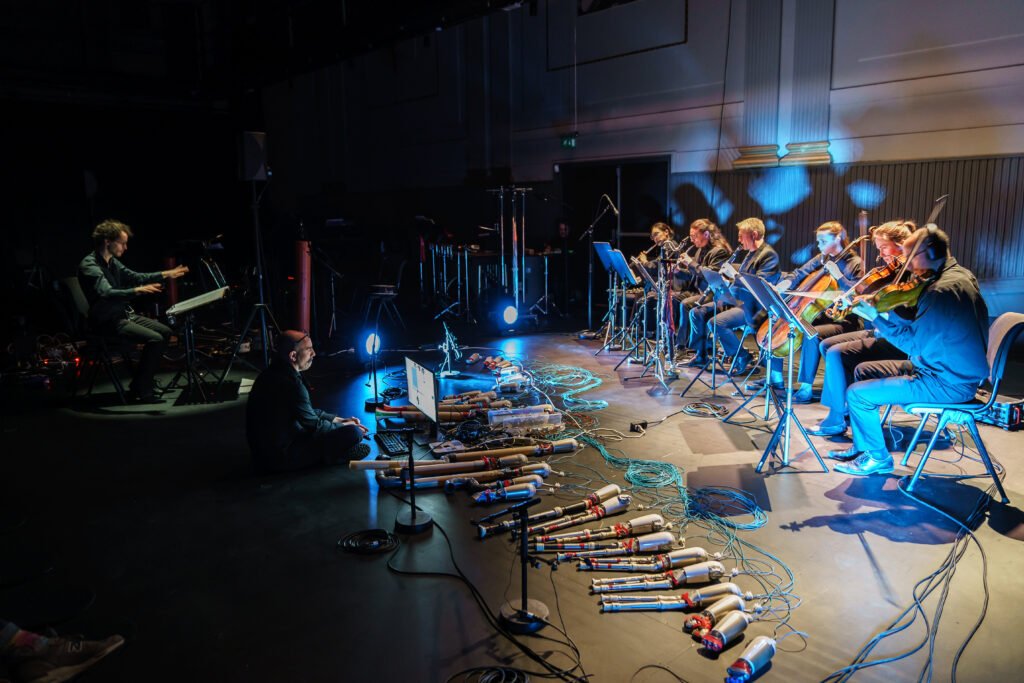
A large number of composers get the opportunity to write new works for the Biennale, which encourages artistic creation in this field of art, and many interdisciplinary performances have emerged from the collaboration of different artists and collectives for the first time, as well as co-productions with domestic and international partners. In the long term, this creates new connections between artistic fields and people while maintaining the stability of existing ones.
Who should visit MBZ? Is the program aimed more at younger or older audiences? Can the festival appeal to those who aren’t necessarily fans of experimental music?
Absolutely! MBZ isn’t for everyone, but anyone interested in art and culture can find something for themselves, regardless of age, education level, or general interests. That’s the whole point—a grand gathering for those who want to be surprised, who are curious, and who want to hear something new. And whatever the reaction to something new may be, it is never in vain because we allowed ourselves to step outside our comfort zone. Even art that is deeply researched, theoretical, or academically contextualized—things a listener may not be familiar with—can still evoke a reaction or emotion. After all, often just a small paragraph of text that we can read about a piece of music opens up an entire world of thought while we listen to it.
If you don’t know where to start, I suggest exploring our festival search tool.
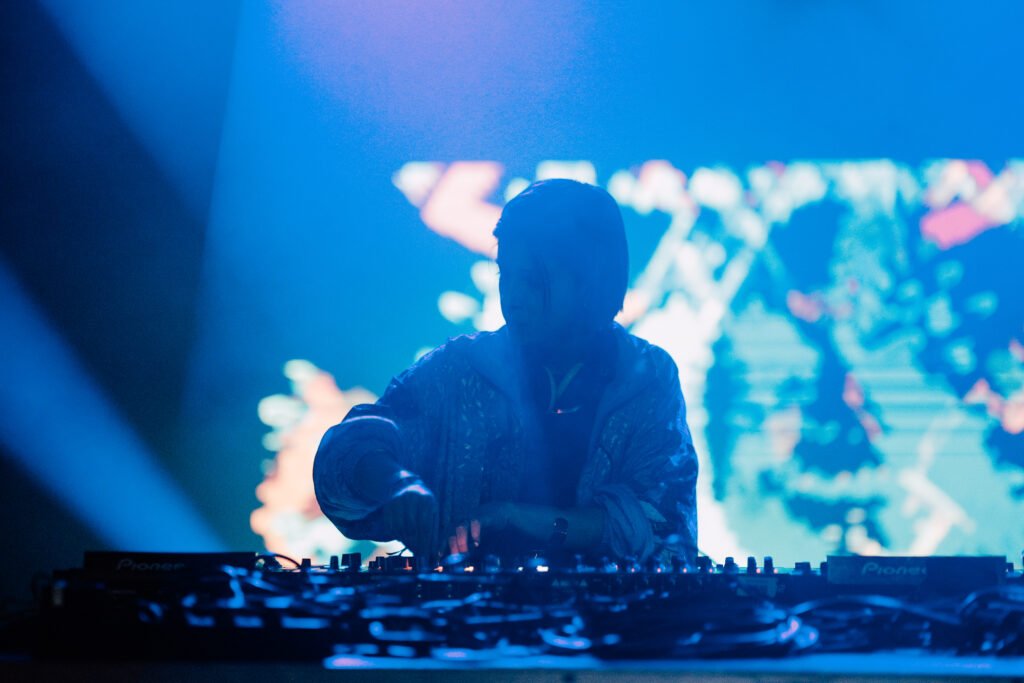
In addition to your extensive experience in organizing cultural events, you also DJ under the name Babilonska and were nominated for the Elector Award for DJ of the Year. How do you balance all these activities? What do you enjoy the most?
I think all my favorite pursuits are a kind of collage and narrative-building—DJing, curating, and communications. I enjoy working on projects because they bring rhythm changes and shifting focal points, just like a DJ set. Some periods are busier with projects, and DJ-ing naturally takes a back seat. But after MBZ, I’m looking forward to dedicating more time to DJ-ing, and I’m planning to launch my own program. Stay tuned!
Finally, in your personal opinion—what is the highlight of this year’s Biennale? What should we absolutely not miss?
Without the usual promotional clichés, I honestly believe everyone will find their own highlight.
If you love musical theater, you probably won’t want to miss Les Murs meurent aussi or the opera about Alan Turing.
If you’re more into experimental music, you should head to KONTEJNER for a jam session with percussionist Rodrigo Constanzo or to the Brodarski Institute for Infused 3’600’000ms. If experimental film is your thing, you can watch that same Infused performance simultaneously at the Museum of Contemporary Art.
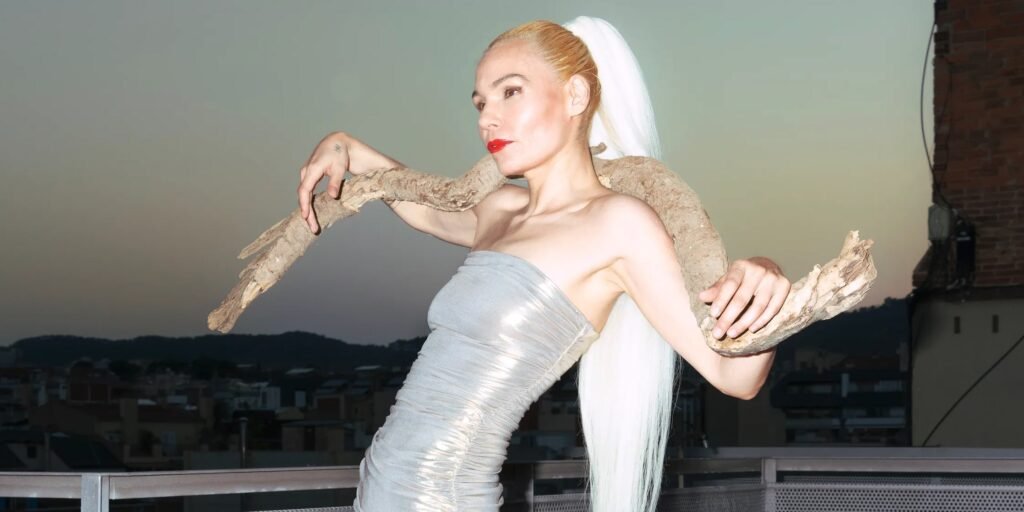
For those who love to dance, there’s ethereal experimental techno by Aïsha Devi or the playful Afro-Portuguese rhythms of Nídia & Valentine. If you’re looking for a break from the classic concert format, check out re/fraction at the Museum of Contemporary Art or immerse yourself in the audiovisual performance Monuments by producer N/OBE. Fans of visual arts might explore all three audiovisual installations or stop by the exhibition of Julije Knifer’s works.
Those who love to dive deeper into the possibilities of instruments can come to the Zagreb Dance Center to hear what a 21st-century harpsichord sounds like, or to the Gavella Drama Theatre for a combination of choral singing and accordion. Those curious about how contemporary ensembles and orchestras sound today might be surprised by defunensemble program, the shamanic compositions of Liza Lim, or a new piece by one of the most influential composers of our time, George Lewis, performed by the HRT Symphony Orchestra.
The possibilities are endless, and due to the nature of such a program, even I don’t yet know what the highlight will be. That’s why I’m really looking forward to discovering it myself!
For those interested, you can dive down the MBZ rabbit hole here.