
Scene
The first day of the Future Sound of Zagreb festival started with two intriguing panels regarding the Croatian electronic music scene – one from the perspective of clubbers, and other from the perspective of producers. The small room of Boogaloo Zagreb turned into a series of Q&A led by Tena Šarčević, journalist, editor and founder of Rejvitalizacija and Arsen Pavešić, journalist at Mixmag Adria and head of the DJ section of the Croatian Musicians Union (HGU).
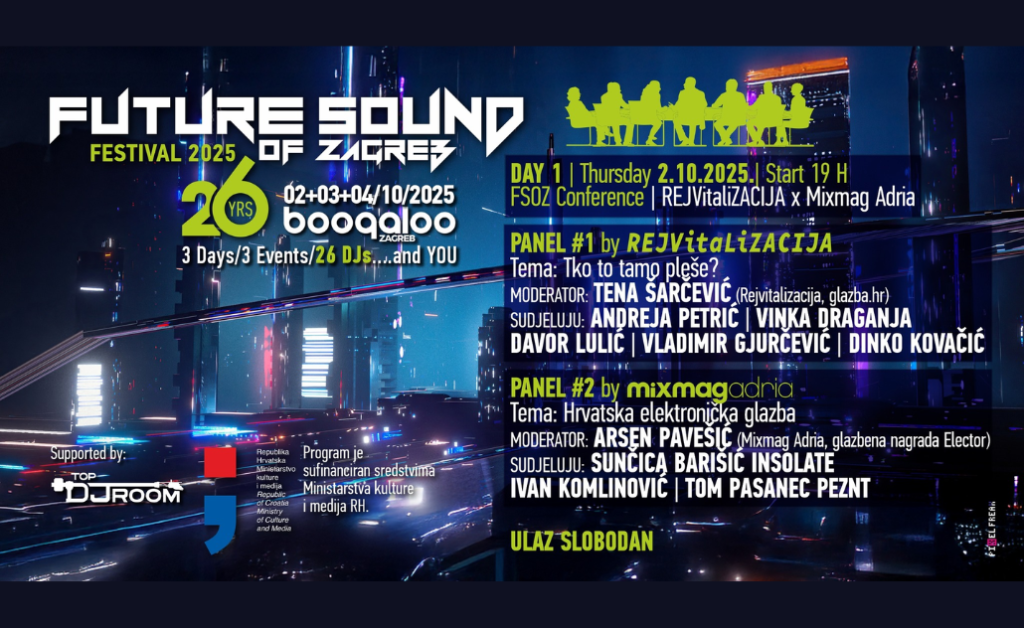
The first panel that started at 7:00 P.M. was hosted by Rejvitalizacija. Tena invited five ravers and clubbers often seen at electronic music events in Croatia and abroad: Andreja Petrić, Vinka Draganja, Davor Lulić, Vladimir Gjurčević and Dinko Kovačić. Throughout an hour-long conversation, they covered various topics, including a comparison of clubbing 20 years ago and now, Croatian and European festivals and events, as well as graphic design and visuals for promoting events, afterparty experiences, and rave culture. They also shared what annoys them most on the dancefloor.
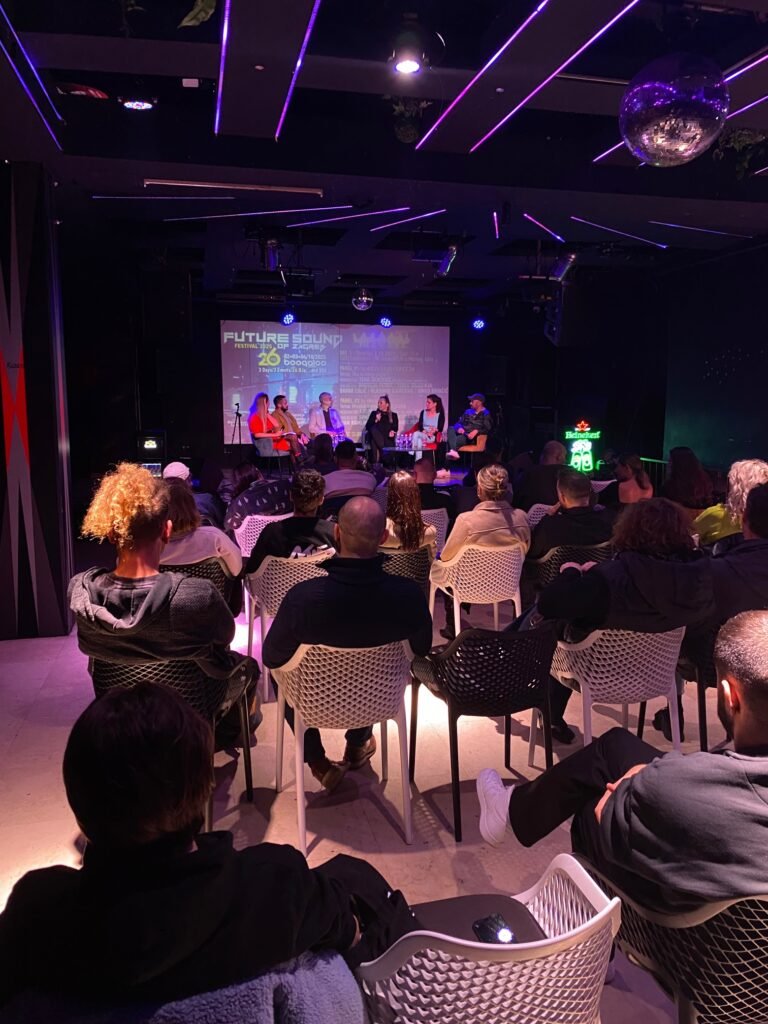
From talking in the first row, backpacks to kissing on the floor, clubbers are bothered by various behaviours, but they all agreed that the most important thing is the positive energy and sense of community that rave culture brings. This panel was greatly conceptualized because people who go to the parties are most often in the audience, not panelists; however, their insights are important for all event producers, promoters and industry professionals who are shaping the scene.
“Production opened the doors to the world”
The second panel, powered by Mixmag Adria, hosted three prominent Croatian electronic music producers, Sunčica Barišić known as Insolate, Ivan Komlinović and Jan Kinčl, who stepped in instead of PEZNT. Arsen started the conversation with a positive trend, stating that there are 200-300 new editions of electronic music in Croatia every year, raising questions about hyperproduction.
“I get 50-100 promos every day on my label e-mail address, and I noticed that more young DJs from Croatia started to produce music“, Insolate stated. Ivan Komlinović followed up and stated that it is because of accessibility and Jan Kinčl commented on hyperproduction as a trend: “The main cause of hyperproduction is technology, but we need additional metrics to measure how much attention those tracks gained”.
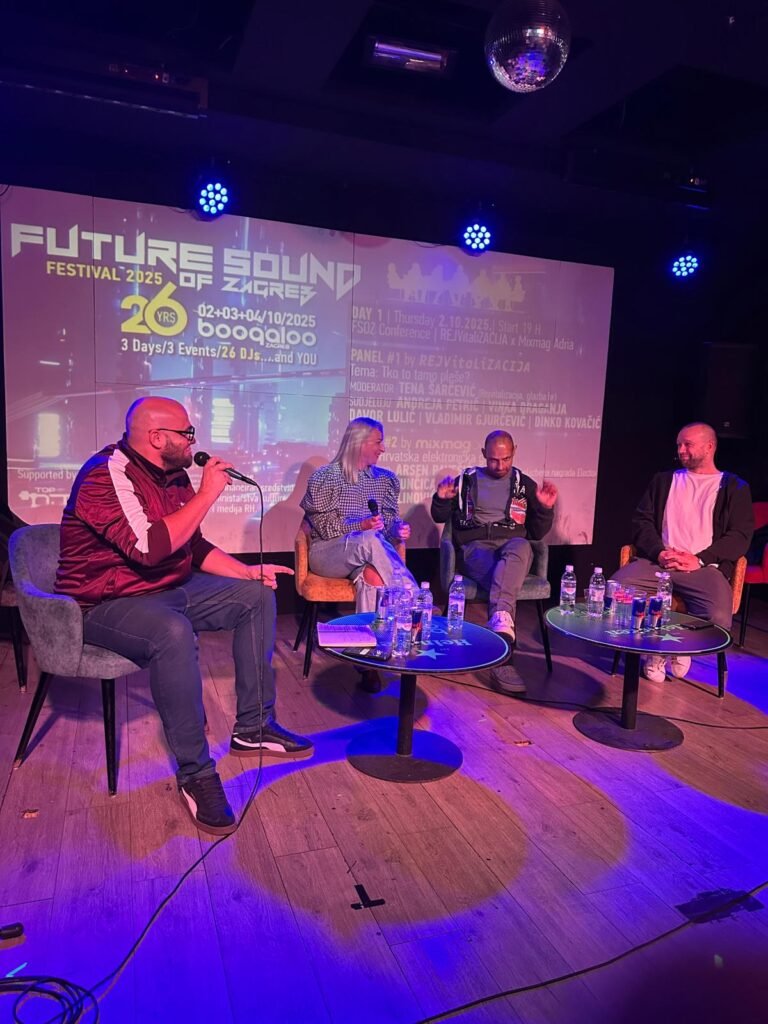
The conversation about music production started to go more in-depth when Kinčl stated that he thinks the key to success is consistency. “Production opened the doors to the world. Even though it is primarily an artistic way to express yourself, it is also a strong marketing tool. Based on your music, promotors and the audience can identify with you“, Insolate said.
Arsen was in the middle of the panel, but the audience had already jumped in and started to ask questions about the music production process, such as ‘How do you know the track is finished? What is the key to releasing it? How many tracks should you send to the labels?‘ Komlinović shared advice on how to choose the labels and set realistic expectations. Insolate said that 5-10 promo tracks to labels should be enough, and they all agreed that knowing when the track is finished is the hardest question to answer. “When you start to change the track in a way that it sounds different, then you know you overdid it.“, Kinčl concluded.
HGU Announces Remix Contests
To end the discussion, Pavešić asked the final question for all three of them: What do you think about remix contests? “I think it is a great trend, for new producers and the already established ones“, Komlinović said while Kinčl and Insolate immediately agreed with him. It was a great introduction for the new project by the Croatian Musicians Union (HGU) that will start opening the remix contests based on older Croatian disco and 80s songs, and more details should be revealed soon.
We believe this scene needs more similar events and conversations between the audience and industry professionals. Pairing young DJs with established producers and newer collectives with the already established ones can only result in growth and development of the scene, while the audience can clearly speak about what they love and what it means to them. All in all, a perfect platform for growing collaborations.